
The 'Hands-Free' Operating Room
Touch is contamination. In the future, the surgeon commands the environment by voice: 'Autenticare, show the MRI on monitor 2'.
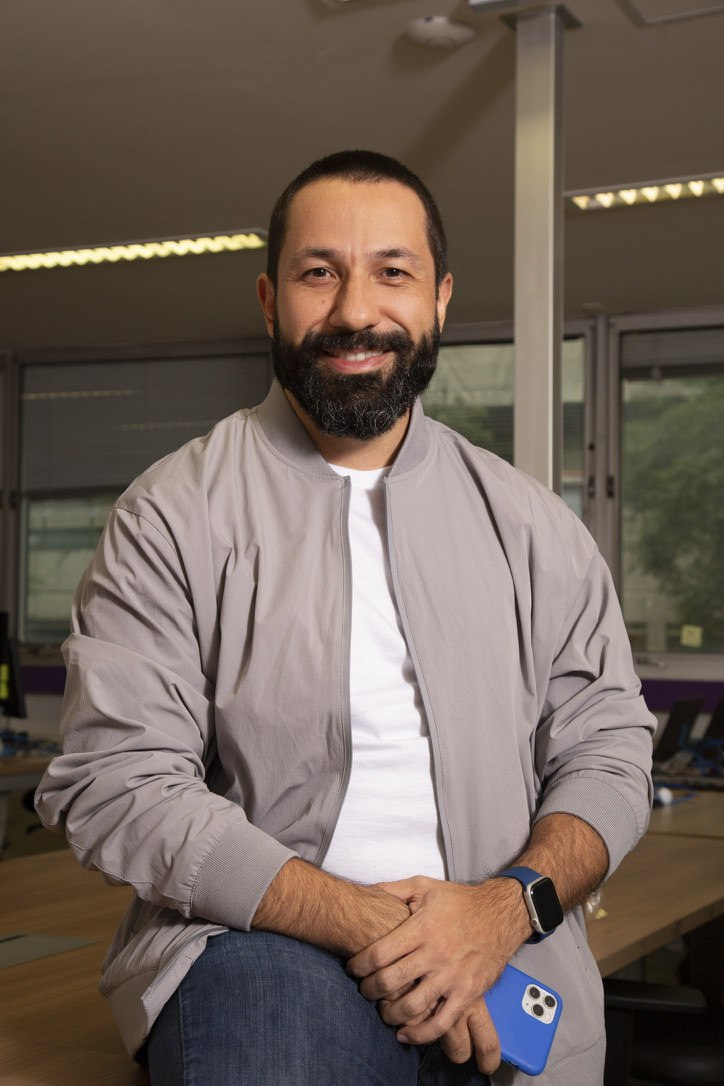
Fabiano Brito
CEO & Founder

Sterility is sacred. Every time a surgeon leaves the sterile field to use a mouse and view an MRI, they must change gloves or ask an assistant (who often does not know how to operate the system).
The risk of cross-infection increases with every touch on a peripheral. And the wasted time is costly — every minute of surgery runs into thousands of reais.
| Surgical Workflow | Traditional Operating Room | Hands-Free Operating Room |
|---|---|---|
| Sterility Maintenance | Surgeon breaks sterile field or relies on an assistant to click screens. | Surgeon remains 100% sterile, controlling displays via voice. |
| Image Navigation (PACS) | Manual search, slow adjustments, and communication lag with assistants. | Instant voice commands display MRIs/CTs on designated monitors. |
| EHR Documentation | Post-operative typing or manual logging by a circulating nurse. | Real-time, voice-logged timestamps and clinical actions. |
| Supply Logistics | Manual phone calls or leaving the room to request additional materials. | Voice-activated ERP requests for automated restocking. |
The operating room OS
Hands free. Full focus on the patient. No contamination. This is not science fiction — it is reality in our pilot projects with top hospitals.
Zero Contamination Risk
Eliminate physical touchpoints like mice, keyboards, and touchscreens to maintain an absolute sterile field.
Real-Time Documentation
Dictate surgical notes and log timestamps directly into the EHR without interrupting the procedure.
Seamless PACS Integration
Call up MRIs, CT scans, and patient records instantly using natural voice commands on 4K displays.
Automated Supply Logistics
Order sutures and equipment directly from the OR, syncing automatically with ERP inventory systems.
Acoustic Assessment
We analyze the OR's unique acoustic environment, accounting for surgical aspirators and equipment noise.
PACS & EHR Integration
Our voice interface is securely integrated with your hospital's PACS/RIS and Electronic Health Records.
Custom Voice Training
The system is calibrated to recognize complex medical terminology, accents, and voices muffled by surgical masks.
60-Day Pilot Launch
Deploy the solution in a single operating room to measure time savings, sterile compliance, and team satisfaction.
Frequently Asked Questions sobre The ‘Hands-Free’ Operating Room
What is the problem with touching mice and tablets in the operating room? Touching mice and tablets within the sterile field can be a vector for infection.
How does the voice system work in the operating room? The voice system allows the surgeon to request information, such as the patient’s MRI, start timers, and record information in the medical record, all through voice commands.
What are the requirements for a voice system in an operating room? The voice system needs to have a voice recognition rate greater than 98% even with a mask and aspirator, a short wake word, voice confirmation, fallback via foot pedal, and be compliant with LGPD and RDC 302/302-A ANVISA.
What is a POC (Proof of Concept) for a ‘hands-free’ operating room? An Autenticare POC includes directional microphones, a customized wake word, integration with PACS/RIS/Medical Record, and a voice confirmation protocol, with the goal of measuring the reduction of unproductive time and team satisfaction in 60 days.
Does your surgical suite still rely on an assistant clicking a mouse?
Autenticare POC in 1 surgical room: directional microphones, custom wake word, integration with PACS/RIS/Medical Record, voice confirmation protocol. 60 days to measure the reduction in non-productive time and team satisfaction.