
OpenClaw: The Blueprint for Personal Agents
From a 1-hour prototype to 6,600 commits/month. The story of OpenClaw and lessons on agentic engineering and verification loops.
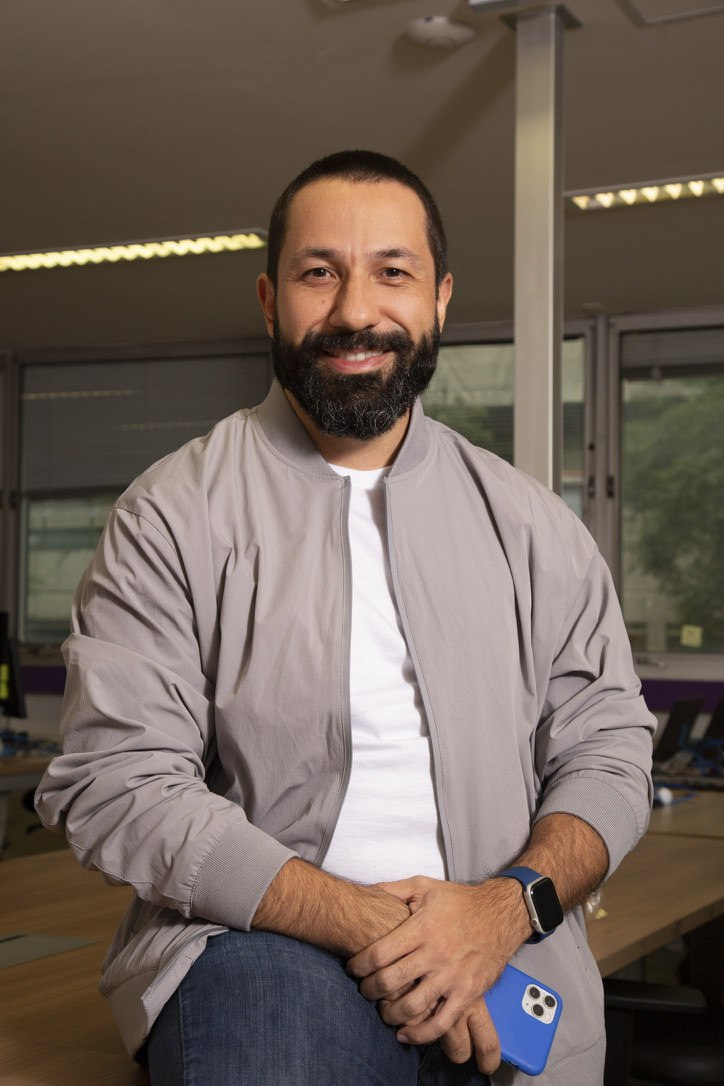
Fabiano Brito
CEO & Founder

OpenClaw is a local-first personal agent project that connects chat channels directly to local command-line interfaces and LLMs. For enterprises, this architecture demonstrates how closing the generate-validate-fix loop within existing communication channels drives adoption, though scaling it securely requires a sandbox, policy-as-code, tool-use logs, and CI as judge.
OpenClaw started as a "WhatsApp → CLI → Claude Code" assembled in ~1 hour for the creator to "talk to the computer" when away from it.
The combination of local-first + chat channels + iterativeness exploded in adoption, but also triggered security alerts. The lesson: speed comes from closing the "generate → validate → fix" cycle with minimum friction.
Transparency note: this article analyzes the trajectory of the OpenClaw project (formerly Clawd/Moltbot) and the agentic engineering practices publicly documented by its creator, Peter Steinberger.
The "1 hour" moment: WhatsApp as a control interface
The starting point is almost trivial. Peter Steinberger wanted to interact with his computer remotely. Instead of building a complex app, he built a relay: a WhatsApp message triggered a CLI, which passed the prompt to Claude Code and returned the response to the chat.
"I built this in one hour." — Peter Steinberger on the Lex Fridman Podcast.
Strategic translation: the innovation was not a new LLM, it was the channel. By taking the agent out of the lab chat and putting it on WhatsApp/Slack, friction dropped to zero.
Why OpenClaw became a phenomenon
Unlike purely cloud-based solutions, OpenClaw bets on local-first. You run the agent on your machine (or homelab), keeping data and API keys under your control.
Where the user already is
WhatsApp, Discord, Slack, Teams. No new app, no onboarding. Zero friction.
Local-first
Data, keys and filesystem on the owner's machine. Cloud only when necessary.
Immediate verification
Generate → compile → test → fix, without waiting for remote CI. Human cadence.
From "vibe coding" to Agentic Engineering
"Vibe coding" became a meme, but Steinberger makes a crucial distinction: the serious process is called Agentic Engineering. Agents amplify execution — they don't replace architecture.
At OpenClaw's peak, the creator made more than 6,600 commits in a single month operating as a "one-man company" through closed loops:
The "workshop smell": pipeline > prompt
If you want to replicate this level of automation in your company, don't focus on the prompt. Focus on the pipeline. The four technical items that make the difference:
Sandbox per task
Dedicated container or worktree. Agent doesn't touch the main repo without a reviewed merge.
Tool-use logs
Every command the agent executed, with timestamp and justification. Without this, zero forensics.
Policy-as-code
What the agent can/cannot do written in versioned code — not in an IT PDF.
Blocking CI
Agent code goes through the same gate as human code. Failing tests = PR blocked.
The dark side: security and governance
Giving an agent access to your OS creates a massive attack surface. WIRED reported that organizations have started restricting agentic tools due to Prompt Injection risks.
rm -rf ~") and the agent obeys. Mitigation is not a better prompt — it is least privilege (no access to files outside the worktree), human confirmation on destructive actions, command allowlist and context break (system instructions separate from user data).
An agent is a workforce. And every workforce needs minimum permissions, audit and human review at sensitive points — this applies equally to intern, employee and AI agent.
Autenticare connection: A-MAD and enterprise governance
At Autenticare, we translate this acceleration to the corporate world through A-MAD (AI-Managed Agile Development). OpenClaw is the perfect example of individual power; A-MAD is how we scale that power with enterprise governance — not "writing code fast", but building the pipeline that ensures every line generated by an agent is audited, secure and business-aligned.
Frequently Asked Questions sobre OpenClaw: The Blueprint for Personal Agents
What was the initial motivation behind OpenClaw? Peter Steinberger wanted to interact with the computer remotely and built a system where messages on WhatsApp triggered a CLI, which passed the prompt to Claude Code and returned the response to the chat.
Why did OpenClaw become popular? OpenClaw bets on local-first, allowing users to run the agent on their own machine, keeping data and API keys under their control, unlike purely cloud-based solutions.
What is the importance of the communication channel in OpenClaw? The innovation was not a new LLM, but the channel. By putting the agent on WhatsApp/Slack, the friction dropped to zero.
What is ‘Agentic Engineering’? ‘Agentic Engineering’ is the serious process where agents augment execution, but do not replace the architecture.
Is your team ready to run 10 agents in parallel?
Autenticare delivers: sandbox architecture, auditable tool-use logs, policy-as-code, blocking CI pipeline, corporate SSO/IAM, cost dashboards per agent. From individual prototype to a workflow that passes risk committee.